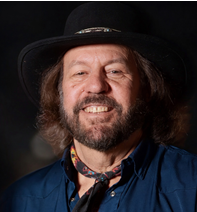

Mark Christian Maierhoffer, a gifted guitarist, songwriter, producer and sound engineer whose five-decade career carried him from major-label recordings to the Los Angeles rockabilly and roots-music scene, died August 11, 2026. He was 71.
Mark was born June 1, 1955, in Orange, California, to Delores and Albert Maierhoffer. Except for extended periods spent touring for performances, he was a lifelong resident of California.
Over a career spanning approximately 50 years, Mark earned the respect of fellow musicians not only for his exceptional guitar playing, but also for his work as a songwriter, producer and sound engineer. He was a musician’s musician — someone whose knowledge, generosity and willingness to share his experience led him to mentor numerous musicians and singers throughout his life.
Working under the name Mark Maierhoffer earlier in his career and later professionally as Mark Christian, he became part of the fabric of Los Angeles’ recording and performance community.
His studio career included guitar and songwriting work associated with some of the most recognizable names in popular music. He played guitar on the Village People’s 1981 album Renaissance and received songwriting credits on songs from the record. He co-wrote “Rudy,” recorded by Cher on her 1982 album I Paralyze. As Mark Christian, he played guitar on The Monkees’ 1987 album Pool It! and contributed to recordings associated with Berlin and Robert Palmer.
Among the achievements especially cherished by Mark were his many gold and platinum records.
Mark was also a working member of the Los Angeles rock scene. In the late 1980s, he joined former Berlin members John Crawford and Rob Brill to form The Big F. The band signed with Elektra Records and released its self-titled album in 1989, followed by Is on Chrysalis. The Los Angeles Times covered the group during both periods, identifying Mark as its guitarist.
But while Mark’s career included notable work behind and alongside well-known artists, he was never content simply to be a session player. Music was his means of expression, experimentation and connection.
His latest band, Merle Jagger, became the clearest expression of that philosophy. Based in Los Angeles, the band blended country, rock and blues, drawing on Mark’s lifelong love of American roots music and his extraordinary command of the guitar.
Merle Jagger’s 2006 album Rancho Los Angeles showcased Mark as guitarist, banjo player, songwriter and producer. In later years, the band developed its distinctive “Ranch Rock” sound, bringing together rockabilly, country, western swing, blues and electric guitar.
In 2011, Merle Jagger opened for legendary banjo player Earl Scruggs at UCLA’s Royce Hall. Mark spoke then about his fascination with the rapid-fire technique of Scruggs and his efforts to translate the spirit of banjo playing to electric guitar.
In 2022, Mark released Trash Talking Guitars with Merle Jagger, expanding the band’s musical palette and taking on lead vocals as well as guitar and songwriting. The album received attention from the roots-music press, and Mark was interviewed about the band and his musical philosophy by Making a Scene.
For Mark, however, the names on album covers and the records on the wall were only part of the story. His greatest legacy may have been the people he encouraged along the way. Throughout his career, he shared his knowledge with younger musicians and singers, helping others find their own voices and navigate the demanding world of professional music.
To his family, Mark was lovingly known as “Uncle Rocker.” He will be forever remembered by them as well as by the myriad friends, musicians, singers, fans and colleagues whose lives he touched.
Mark never married. His charisma, humor, musicianship and music were central to his life. He devoted himself to his craft, to the people around him and to the endless pursuit of the next song, the next sound and the next musical idea.
Music was Mark’s life. His music is his legacy.
He will be deeply missed and lovingly remembered as Uncle Rocker — a California original, a gifted guitarist, a mentor, and a lifelong lover of rock and roll.
There will be a celebration of Mark’s life at the Maui Sugar Mill Saloon later this year. Details will be revealed on his Facebook page.
Research for Life
We firmly believe that the internet should be available and accessible to anyone, and are committed to providing a website that is accessible to the widest possible audience, regardless of circumstance and ability.
To fulfill this, we aim to adhere as strictly as possible to the World Wide Web Consortium’s (W3C) Web Content Accessibility Guidelines 2.1 (WCAG 2.1) at the AA level. These guidelines explain how to make web content accessible to people with a wide array of disabilities. Complying with those guidelines helps us ensure that the website is accessible to all people: blind people, people with motor impairments, visual impairment, cognitive disabilities, and more.
This website utilizes various technologies that are meant to make it as accessible as possible at all times. We utilize an accessibility interface that allows persons with specific disabilities to adjust the website’s UI (user interface) and design it to their personal needs.
Additionally, the website utilizes an AI-based application that runs in the background and optimizes its accessibility level constantly. This application remediates the website’s HTML, adapts Its functionality and behavior for screen-readers used by the blind users, and for keyboard functions used by individuals with motor impairments.
If you’ve found a malfunction or have ideas for improvement, we’ll be happy to hear from you. You can reach out to the website’s operators by using the following email
Our website implements the ARIA attributes (Accessible Rich Internet Applications) technique, alongside various different behavioral changes, to ensure blind users visiting with screen-readers are able to read, comprehend, and enjoy the website’s functions. As soon as a user with a screen-reader enters your site, they immediately receive a prompt to enter the Screen-Reader Profile so they can browse and operate your site effectively. Here’s how our website covers some of the most important screen-reader requirements, alongside console screenshots of code examples:
Screen-reader optimization: we run a background process that learns the website’s components from top to bottom, to ensure ongoing compliance even when updating the website. In this process, we provide screen-readers with meaningful data using the ARIA set of attributes. For example, we provide accurate form labels; descriptions for actionable icons (social media icons, search icons, cart icons, etc.); validation guidance for form inputs; element roles such as buttons, menus, modal dialogues (popups), and others. Additionally, the background process scans all the website’s images and provides an accurate and meaningful image-object-recognition-based description as an ALT (alternate text) tag for images that are not described. It will also extract texts that are embedded within the image, using an OCR (optical character recognition) technology. To turn on screen-reader adjustments at any time, users need only to press the Alt+1 keyboard combination. Screen-reader users also get automatic announcements to turn the Screen-reader mode on as soon as they enter the website.
These adjustments are compatible with all popular screen readers, including JAWS and NVDA.
Keyboard navigation optimization: The background process also adjusts the website’s HTML, and adds various behaviors using JavaScript code to make the website operable by the keyboard. This includes the ability to navigate the website using the Tab and Shift+Tab keys, operate dropdowns with the arrow keys, close them with Esc, trigger buttons and links using the Enter key, navigate between radio and checkbox elements using the arrow keys, and fill them in with the Spacebar or Enter key.Additionally, keyboard users will find quick-navigation and content-skip menus, available at any time by clicking Alt+1, or as the first elements of the site while navigating with the keyboard. The background process also handles triggered popups by moving the keyboard focus towards them as soon as they appear, and not allow the focus drift outside it.
Users can also use shortcuts such as “M” (menus), “H” (headings), “F” (forms), “B” (buttons), and “G” (graphics) to jump to specific elements.
We aim to support the widest array of browsers and assistive technologies as possible, so our users can choose the best fitting tools for them, with as few limitations as possible. Therefore, we have worked very hard to be able to support all major systems that comprise over 95% of the user market share including Google Chrome, Mozilla Firefox, Apple Safari, Opera and Microsoft Edge, JAWS and NVDA (screen readers).
Despite our very best efforts to allow anybody to adjust the website to their needs. There may still be pages or sections that are not fully accessible, are in the process of becoming accessible, or are lacking an adequate technological solution to make them accessible. Still, we are continually improving our accessibility, adding, updating and improving its options and features, and developing and adopting new technologies. All this is meant to reach the optimal level of accessibility, following technological advancements. For any assistance, please reach out to