

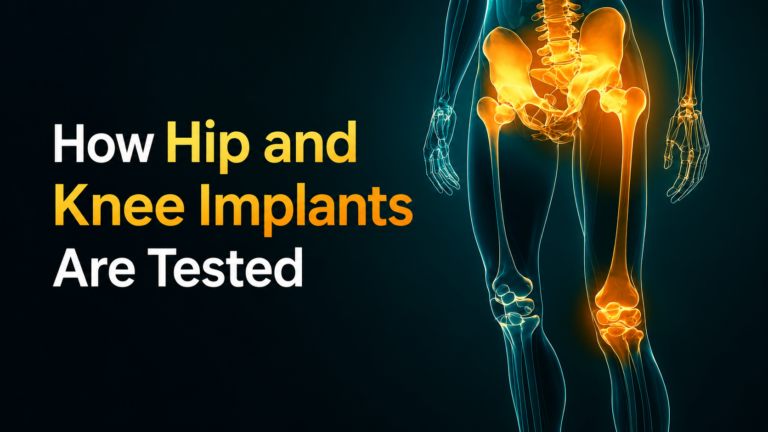
How New Hip and Knee Implants Are Tested and Refined
Before a new joint implant reaches a patient, researchers need to know how it holds up under pressure, movement, and time. This process is how new hip and knee implants are tested and refined before they become part of routine orthopedic care.

Why Researchers Study Cancer Cells and Tumor Tissue Together
Cancer is a complex disease that cannot be fully understood from a single perspective. Researchers often study both cancer cells and tumor tissue to better understand how the disease develops and behaves.
How the Immune System Works and Protects Your Body
The immune system is the body’s defense network. To understand how the immune system works, it helps to see it as a connected system of cells, tissues, organs, and proteins that recognize danger, control infection, and help the body recover after injury.
What is Prion Disease?
Prion disease refers to a rare and deadly group of brain illnesses that begin when a normal protein folds into the wrong shape and then pushes other proteins to copy that harmful shape, which slowly damages brain cells and disrupts how the brain controls thinking, mood, and movement.

How Medical Devices Are Approved: FDA Clears vs Approves
Medical devices often carry labels that say “FDA cleared” or “FDA approved,” and the wording can create confusion because the terms sound similar. This article explains How Medical Devices Are Approved in the United States and why the FDA uses more than one pathway to review devices.

History of Cadavers
Cadavers have been used in medicine for a long time. The biggest change is how they are provided. Today, whole body donation is based on consent and respect. The history includes ancient practices, periods of change, and today’s donation programs.
Why Cadaver Training Matters in Medical Education
Cadaver training has shaped medical education for centuries, and even with rapid advances in virtual learning, simulation technology, and artificial intelligence, it remains one of the most powerful ways to prepare clinicians for real-world patient care.

Does Exercise Support Longevity?
The way we move today shapes how our bodies age tomorrow. Research shows that exercise supports longevity by preserving strength, regulating metabolism, and improving the body’s ability to recover from stress.